

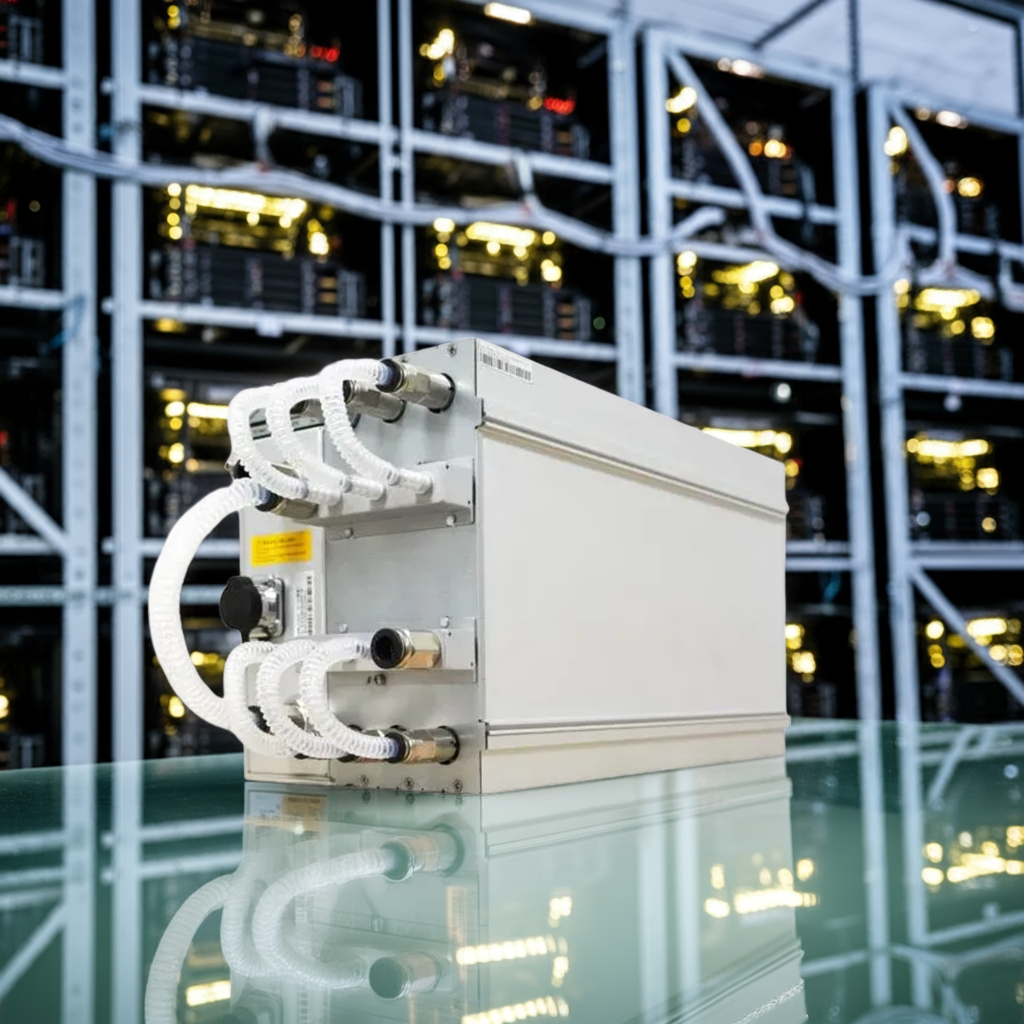
A Technical Guide to Bitcoin ASIC Machines
Introduction
Bitcoin mining relies on specialized hardware designed to process the SHA-256 cryptographic hashing algorithm. Unlike general-purpose computing hardware, SHA-256 ASIC miners are engineered specifically for high-efficiency Bitcoin mining operations.
Understanding how SHA-256 mining hardware works is essential before purchasing an ASIC miner. This guide explains the technical fundamentals, key components, and performance metrics that define modern Bitcoin mining machines.
Bitminers supplies SHA-256 ASIC mining hardware with clearly documented specifications to support informed purchasing decisions.
What Is SHA-256?
SHA-256 (Secure Hash Algorithm 256-bit) is a cryptographic hash function used by the Bitcoin network to validate transactions and secure blocks on the blockchain.
Every time a miner attempts to validate a new block, the mining hardware performs trillions of SHA-256 calculations per second. The goal is to find a hash value that meets the network’s required difficulty target.
Because SHA-256 calculations require high computational power, specialized ASIC hardware was developed to perform this task efficiently.
What Is an ASIC Miner?
ASIC stands for Application-Specific Integrated Circuit.
An ASIC miner is a device built specifically to perform one task: processing SHA-256 hashing computations for Bitcoin mining.
Unlike GPUs or CPUs, ASIC miners cannot be repurposed for general computing tasks. Their design is optimized exclusively for hashing efficiency.
Core Components of a SHA-256 ASIC Miner
Understanding the internal structure of a mining machine helps buyers evaluate performance and maintenance requirements.
1. Hash Boards
Hash boards contain the ASIC chips responsible for performing SHA-256 calculations.
A miner may contain multiple hash boards, each populated with dozens or hundreds of chips.
2. ASIC Chips
These chips are the computational core of the machine. They are engineered to process SHA-256 calculations as efficiently as possible.
Chip design improvements typically result in:
- Higher hashrate
- Lower energy consumption per terahash
- Improved thermal stability
3. Control Board
The control board manages:
- Communication with mining pools
- Firmware operation
- Temperature monitoring
- System configuration
4. Power Supply Unit (PSU)
The PSU converts electrical input into usable power for the ASIC miner. It must match the power requirements specified for the machine.
Stable power delivery is critical for consistent operation.
Key Performance Metrics Explained
When reviewing mining hardware specifications, buyers should understand the following metrics.
Hashrate (TH/s)
Hashrate measures the number of SHA-256 calculations performed per second.
For example:
- 150 TH/s means 150 trillion hash attempts per second.
Higher hashrate increases the miner’s contribution to total network hashing power.
Power Consumption (Watts)
Power consumption reflects total energy usage under standard operating conditions.
This metric is important for calculating electricity costs.
Energy Efficiency (J/TH)
Energy efficiency is measured in joules per terahash.
Lower J/TH values indicate more efficient energy use.
Efficiency plays a major role in long-term operational planning.
Operating Temperature
Manufacturers provide recommended temperature ranges for stable performance.
Improper cooling or environmental conditions may reduce system stability.
Evolution of SHA-256 Mining Hardware
Bitcoin mining hardware has evolved significantly over time:
- CPU Mining (Early Stage)
- GPU Mining
- FPGA Devices
- ASIC Mining Machines
Modern ASIC miners are purpose-built for SHA-256 performance and are significantly more efficient than earlier hardware generations.
Newer-generation ASIC miners typically offer:
- Improved chip architecture
- Higher hashrate output
- Enhanced power efficiency
- Advanced firmware features
Infrastructure Requirements for SHA-256 Miners
Before purchasing an ASIC miner, buyers should evaluate infrastructure readiness.
Electrical Capacity
Mining machines often require:
- High wattage circuits
- Stable voltage supply
- Industrial-grade outlets (in some cases)
Electrical compatibility should be verified before installation.
Ventilation and Cooling
ASIC miners generate substantial heat. Proper airflow or hydro cooling systems must be implemented according to the miner’s design.
Noise Considerations
Air-cooled ASIC miners can produce significant fan noise during operation.
Operational location should account for this factor.
Firmware and Configuration
ASIC miners operate using firmware that manages hashing operations and pool communication.
Firmware updates may provide:
- Performance optimization
- Stability improvements
- Monitoring enhancements
It is recommended to follow manufacturer guidelines when performing firmware updates.
Responsible Hardware Evaluation
When reviewing SHA-256 mining hardware, buyers should confirm:
- Exact model name
- Hashrate rating
- Power consumption
- Cooling type
- Condition (new, used, refurbished)
- Warranty coverage
- Included components
Bitminers publishes clearly documented product specifications for every listed mining machine.
Frequently Asked Questions
Can SHA-256 ASIC miners mine other cryptocurrencies?
SHA-256 ASIC miners can mine cryptocurrencies that use the SHA-256 algorithm. Buyers should verify compatibility before use.
Does higher hashrate mean better efficiency?
Not necessarily. Efficiency is measured by J/TH, which reflects energy usage per unit of hashing power.
Are ASIC miners upgradeable?
Most ASIC miners are not upgradeable in terms of chip performance. Hardware generation determines performance capability.
Conclusion
SHA-256 ASIC mining hardware is purpose-built for Bitcoin mining operations. Understanding internal components, efficiency metrics, and infrastructure requirements helps buyers make responsible equipment decisions.
Rather than focusing solely on hashrate numbers, evaluating total power consumption, cooling requirements, and warranty coverage provides a more complete assessment.
Bitminers supplies SHA-256 ASIC mining machines with transparent specifications and clearly stated technical details to support informed purchasing decisions.
For current inventory and model availability, review our product listings or contact our support team for clarification.