
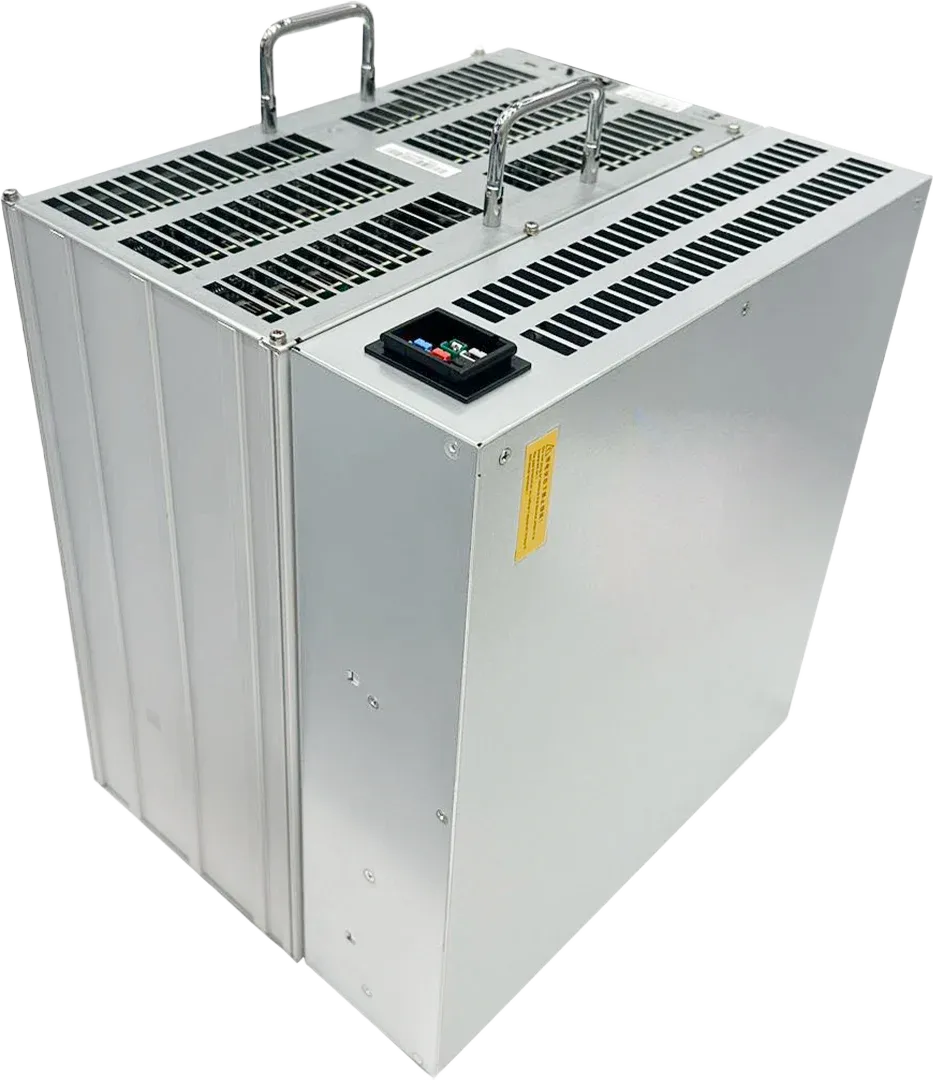
Immersion Cooling for Crypto Mining: How It Works and What You Need
Short answer: immersion cooling for crypto mining means submerging ASIC miners in a non-conductive (dielectric) fluid that carries heat away from the hashboards, instead of blowing air across them with fans. The warm fluid is pumped to a heat exchanger and a dry cooler, cooled, and returned to the tank. You can buy immersion miners built for this from the factory, or convert air-cooled machines by removing their fans, which can affect the warranty.
This guide explains how immersion works, single-phase versus two-phase fluids, what a setup needs, immersion-ready miners versus conversions, and how immersion compares with air and hydro cooling. It is a planning overview, not an installation manual. Bitminers does not guarantee mining profitability.
What immersion cooling is for ASIC miners
An air-cooled ASIC pulls air through its case with high-speed fans. An immersion setup removes the air from the picture: the whole miner, including hashboards, control board and power supply, sits in a tank filled with dielectric fluid. Because the fluid does not conduct electricity, the electronics keep running while fully submerged. As Braiins’ overview of mining cooling methods puts it, the fluid is usually a dielectric fluid or mineral oil, and it is a far more effective cooling medium than air.
The fluid touches every hot component directly, so heat is removed evenly across the board rather than from whichever chips sit in the strongest airflow. The tank is then cooled as one unit, which is why immersion is usually planned at the level of the whole installation rather than machine by machine.
Single-phase vs two-phase dielectric fluids
Immersion systems fall into two families, depending on whether the fluid changes state.
| Single-phase | Two-phase | |
|---|---|---|
| How heat leaves the tank | The fluid stays liquid; a pump moves warm fluid to a heat exchanger and back | The fluid boils on hot components; the vapor is condensed back into liquid and drips back into the tank |
| Typical fluids | Hydrocarbon-based fluids such as synthetic or mineral oils | Engineered fluids with a low boiling point, historically often fluorinated |
| Tank design | Open or lidded tank with pumps | Sealed tank with a condenser, to keep vapor from escaping |
| Main considerations | Pump and heat-exchanger sizing, fluid quality over time | Fluid cost and availability, vapor containment |
Fluid availability is a practical point for two-phase systems. In December 2022, 3M announced it would exit PFAS manufacturing by the end of 2025, including fluorinated fluids. Whichever type you consider, ask the fluid supplier for its safety data sheet and its material compatibility list before buying.
What an immersion setup needs
A single-phase installation is built from a handful of parts:
- Tank: holds the miners and fluid, with racks or slots sized for the machine models you plan to use.
- Dielectric fluid: chosen for the miners and materials in the tank. Fluid volume is set by the tank size.
- Pump: circulates fluid between the tank and the heat exchanger. Many designs include a backup pump, because flow is what keeps the miners cool.
- Heat exchanger: transfers heat from the dielectric fluid to a separate water or glycol loop.
- Dry cooler or other heat rejection: releases that heat to outside air, or to a building system if you reuse it.
- Filtration and monitoring: filters to keep the fluid clean, plus temperature, flow and level sensors with alarms.
- Power distribution and networking: circuits sized for the total load and Ethernet to every miner, as with any farm.
Fluid compatibility matters for everything that goes into the tank. Labels, adhesives, some plastics, cable jackets and thermal compounds can react with or contaminate certain fluids. Check the fluid supplier’s compatibility guidance against the miner and cables you plan to submerge. For the wider planning picture of power capacity, space and permits, see How to Plan a Bitcoin Mining Farm.
Immersion miners vs converting air-cooled machines
Factory immersion models
An immersion miner is built and configured by the manufacturer to run submerged, without fans. These are the immersion models listed on Bitminers at the time of writing (October 3, 2026):
| Model | Hashrate | Power / efficiency | Bitminers price |
|---|---|---|---|
| Antminer S21 Immersion | 239 TH/s | See listing | $3,252.63 |
| Antminer S21 XP Immersion | 300 TH/s | See listing | $2,150.00 |
| Antminer S23 Immersion | 442 TH/s | 5,304 W, 12.0 J/TH | $9,182.25 |
| Avalon A1566I | 267 TH/s | 5,073 W, 19.0 J/TH | $3,446.72 |
More immersion and hydro versions of the S21 family are in our Antminer S21 category. To compare machines on efficiency rather than hashrate alone, see hashrate, terahash and J/TH explained.
Converting an air-cooled miner
Many air-cooled models can run in immersion after preparation. According to the same Braiins article, this usually means removing fans and stickers. Because the control board expects to see fans, a converted miner may also need firmware or settings that let it run without them.
Converting a machine is a modification. The Bitminers warranty policy excludes “Unauthorized modifications or repairs” and “Overclocking or improper firmware adjustments”, and manufacturer warranties may have similar terms. If warranty coverage matters to you, choose a factory immersion model, or contact us before modifying a new machine.
Higher power settings in immersion
Because the fluid keeps chip temperatures stable, immersion is often used to run miners at higher power. Braiins notes that in immersion, miners can operate at higher speeds without overheating, which raises power and hashrate. Higher power settings also increase power draw and heat output, and the efficiency in J/TH can change, so check the result against your electricity cost. Bitminers does not guarantee mining profitability.
Running above stock settings usually requires custom firmware, which can affect your warranty and support. Read ASIC miner firmware explained before changing a machine’s power profile.
Immersion vs air vs hydro cooling
A hydro miner is different from an immersion miner. Hydro models, such as the Antminer S21 XP Hyd (473 TH/s, 5,676 W, 12.0 J/TH; $6,669.00 at the time of writing, October 3, 2026), stay dry: coolant flows through cold plates inside the case, through pipes connected to the machine. Immersion submerges the whole miner in fluid.
| Air | Hydro | Immersion | |
|---|---|---|---|
| How heat is removed | Fans push air through the case | Coolant through cold plates inside the miner | Miner submerged in dielectric fluid |
| Miner hardware | Standard air-cooled models | Hydro-specific models | Immersion models or converted air units |
| Infrastructure | Ventilation and exhaust | Pipework, pumps, heat exchanger, dry cooler | Tanks, fluid, pumps, heat exchanger, dry cooler |
| Noise at the machine | Fans are the main source | No case fans; pumps and coolers remain | No case fans; pumps and coolers remain |
| Maintenance focus | Dust, fans, airflow | Coolant quality, leaks, pumps | Fluid quality, filters, pumps |
For a deeper comparison of the first two, see air cooling vs hydro cooling for Bitcoin mining.
Noise and heat reuse
Removing the miner’s fans removes the main noise source of an air-cooled ASIC. An immersion installation still makes noise, though: pumps run continuously and a dry cooler has its own fans, which are usually placed outdoors. Check local noise rules for wherever that equipment will sit.
Heat leaves the tank in a liquid loop rather than as hot exhaust air, which makes it easier to route through a heat exchanger into space heating, water heating or another process. Whether heat reuse makes sense depends on how much heat you can use, at what temperature, and for how much of the year. A plumbing or HVAC professional should design any connection to a building system.
Safety considerations
- Electrical work: immersion tanks draw large, continuous loads. Have circuits, grounding and protection designed and installed by a licensed electrician to local code.
- Fluid handling: follow the fluid’s safety data sheet for storage, flammability, ventilation and protective equipment. Clean up spills promptly, as oily floors are slippery.
- Containment: plan for leaks with drip trays or bunding, and keep fluid away from drains.
- Servicing: power a miner off before lifting it from the tank, and let it drain over the tank or a tray.
- Monitoring: set alarms for pump failure, low fluid level and high temperature, so miners shut down if cooling stops.
Frequently asked questions
What is immersion cooling in crypto mining?
It is a method of cooling ASIC miners by submerging them in a non-conductive dielectric fluid. A pump moves the warm fluid to a heat exchanger and dry cooler, and the cooled fluid returns to the tank.
What is the difference between an immersion miner and a hydro miner?
An immersion miner runs fully submerged in dielectric fluid and has no fans. A hydro miner stays dry and is cooled by liquid flowing through cold plates inside its case, connected by pipes to a cooling loop.
Can I put an air-cooled miner in immersion fluid?
Many models can be converted, typically by removing the fans and stickers and using settings that allow fanless operation. It is a modification, and Bitminers’ warranty excludes unauthorized modifications, so check the warranty terms first.
Does immersion cooling reduce miner noise?
It removes the miner’s own fans, the main noise source on air-cooled units. Pumps and dry cooler fans still make noise, so plan where that equipment goes.
Which dielectric fluid should I use?
Use a fluid the tank maker and fluid supplier approve for your miners and materials. Single-phase systems typically use hydrocarbon-based fluids; ask for the safety data sheet and compatibility list before buying.