
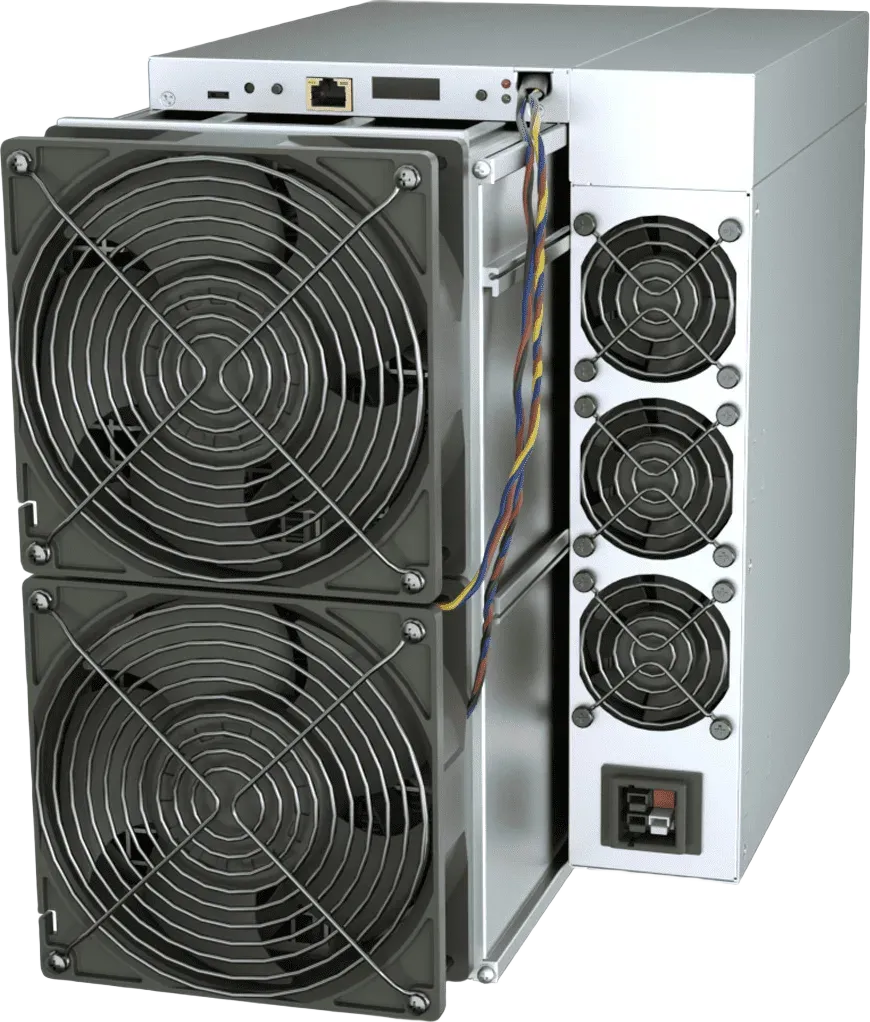
Mining Pools Explained: Shares, Payout Schemes, Fees and Setup
Short answer: a mining pool is a service that combines the hashrate of many miners and shares the block rewards it finds among them in proportion to the work each one contributed. Pools exist because a single machine might go years without finding a block on its own. Instead of a rare, all-or-nothing reward, pool members receive smaller and more regular payouts, minus a pool fee.
This guide covers shares, the main payout schemes (PPS, FPPS and PPLNS), pool fees, ASIC pool setup and what to compare when choosing a pool. It does not rank pools. Bitminers does not guarantee mining profitability.
Why mining pools exist: variance
Bitcoin produces a block about every ten minutes, roughly 144 a day. Your chance of finding any given block equals your hashrate divided by the total network hashrate, and for one machine that fraction is tiny. Over any month or year the result is dominated by luck: most likely nothing, occasionally a full block.
That unpredictability is called variance. A pool reduces it by adding many miners’ hashrate together. The combined pool finds blocks far more often than any single member could, and it splits each reward among everyone who contributed. Even large pools have variance of their own: Bitcoin Optech notes that a pool with 1% of network hashrate would expect about 1.44 blocks a day, yet could still go days without one. How payout schemes handle that leftover variance is the main difference between them.
For the background on blocks, difficulty and rewards, see How Bitcoin Mining Works.
How shares work
A pool cannot pay you only when your machine finds a block, because that would bring back the variance. Instead it measures your work with shares. As the Bitcoin developer guide describes, the pool sets its own target that is far easier to hit than the network target. Any hash your miner finds below the pool’s target is a share.
- Most shares are not blocks. They prove your machine is doing real work.
- Occasionally a share also beats the network target. That share is a valid block, and the pool broadcasts it and collects the reward.
- Share counts measure contribution. If the pool target is 100 times easier than the network target, about 100 shares are needed per block on average, so each share represents roughly 1/100 of a block’s worth of work.
- Difficulty is adjusted per miner. The pool sets share difficulty per connection, so small and large machines both submit shares at a manageable rate.
Your miner’s status page shows accepted and rejected shares. A share is rejected if it arrives after the pool has issued new work (a stale share) or is invalid.
Payout schemes: PPS, FPPS and PPLNS
The payout scheme decides how the pool turns your shares into money, and who carries the remaining variance: you or the pool operator.
| Scheme | What you are paid for | Who carries the variance | What to keep in mind |
|---|---|---|---|
| PPS (pay per share) | A fixed amount for each accepted share, based on the block subsidy and the current difficulty | The pool operator | Transaction fees in blocks are not passed on to you |
| FPPS (full pay per share) | Like PPS, plus a share of transaction fees | The pool operator | Pools usually estimate the fee portion from an average, such as fees over the last 24 hours, so check how the estimate is made |
| PPLNS (pay per last N shares) | A share of each block the pool actually finds, split across the last N shares submitted | You | Payouts rise and fall with the pool’s luck; leaving and rejoining can cost you credit for recent shares |
| Solo | The whole block reward, minus the pool fee, if your machine finds a block | You, entirely | Nothing is paid unless you find a block yourself |
Because PPS and FPPS pools pay for every share whether or not the pool finds a block, the operator needs reserves to cover bad-luck streaks, and that cost is usually reflected in the fee. Under PPLNS the pool only pays out what it actually earns, so your payouts track its real block finds. Apart from fees and the treatment of transaction fees, the scheme mainly changes when you are paid and who absorbs bad luck, not how much work your hashrate does.
Pool fees
Pools charge a fee, usually a percentage deducted from your share rewards. When you compare fees, compare them together with the payout scheme: a PPS or FPPS fee pays for the operator absorbing variance, while a PPLNS fee does not. Also check:
- whether transaction fees are passed on to miners, and how they are calculated;
- the minimum payout threshold and how often payouts are sent;
- any withdrawal fee, or whether the pool covers the on-chain transaction cost of payouts.
Fee schedules change, so read current figures on each pool’s own website. Pool fees reduce gross revenue directly; our ASIC miner profitability calculator includes a pool fee input alongside hashprice.
Solo pools versus pooled mining
A solo pool runs the stratum server and builds block templates, but does not share rewards between users. If your machine finds a block, you receive the reward minus the solo pool’s fee; otherwise you receive nothing. This is how most lottery miners run. At the time of writing (October 2, 2026), the Bitaxe Gamma 601 (1.2 TH/s, 17 W) is $77.17 and the NerdQaxe++ (4.8 TH/s, 76 W) is $279.00. Our guide to solo Bitcoin mining and lottery miners shows how to calculate the odds, and Bitaxe solo mining covers the setup on that device.
Any SHA-256 machine can point at either kind of pool, and you can switch at any time by changing the pool settings.
Setting up a pool on an ASIC miner
Most ASICs are configured through a web interface in your browser. The labels differ by manufacturer, but the steps are similar:
- Create an account with the pool, or for a solo pool note your own Bitcoin payout address. Create a worker name if the pool asks for one.
- Connect the miner to your network by Ethernet and power it on. Find its IP address in your router’s list of connected devices, or with the manufacturer’s IP-finder tool.
- Open that IP address in a browser and log in. Change the default web password straight away.
- Open the pool settings page (on Antminer units it is called Miner Configuration). Enter the details exactly as the pool publishes them:
- Pool URL: the stratum address and port, usually written like stratum+tcp://host:port.
- Worker: typically your account name plus a worker name, such as account.worker1. Solo pools usually take your Bitcoin address here.
- Password: many pools ignore it or ask for a placeholder such as “x”; follow the pool’s instructions.
- Fill in the backup pool slots. Antminer units accept three pools and switch to the next one if the first stops responding.
- Save and apply. The miner restarts its hashing process; after a few minutes the worker should appear on the pool’s dashboard with accepted shares.
Scrypt and Kaspa machines connect the same way, using pools for those algorithms. See merged mining Litecoin and Dogecoin and How to Mine Kaspa.
How to compare mining pools
People search for the “best mining pool”, but there is no single answer: the right pool depends on your hardware, location and how much variance you can accept. Widely used Bitcoin pools include Antpool, F2Pool, ViaBTC and Braiins Pool; we name them only as examples and do not endorse or rank any pool. Compare them on these points:
| What to check | Why it matters |
|---|---|
| Fee | Deducted from all share rewards; compare like for like by payout scheme |
| Payout scheme | PPS and FPPS give steadier payouts; PPLNS follows the pool’s actual luck |
| Minimum payout and frequency | A high threshold with a small machine can mean a long wait before the first payout |
| Server location | A nearby server reduces latency and stale shares |
| Reputation and track record | How long the pool has operated and how it has handled outages and payouts |
| Transparency | Published fee terms, a list of blocks found, and clear statistics on luck and payouts |
| Account security | Two-factor login, payout address locks and read-only watcher links |
Ready to compare hardware? Browse our Bitcoin miners, for example the Antminer S21 Pro (234 TH/s, 3,510 W, 15.0 J/TH; $2,379.00 at the time of writing, October 2, 2026), or read What Is an ASIC Miner? first.
Frequently asked questions
What is a mining pool?
A mining pool is a service that combines many miners’ hashrate, finds blocks together and splits each reward according to the shares every member submitted, minus a fee.
Which mining pool is the best?
No pool is right for everyone. Compare fee, payout scheme, minimum payout, server location, track record and transparency, and choose the combination that fits your hardware and how much payout variation you accept.
Do I need a mining pool to mine Bitcoin?
No. You can mine solo through a solo pool or your own node. Without a pool, though, you receive nothing unless your own machine finds a block, which for a single device is rare.
Can I switch mining pools later?
Yes. Change the pool URL and worker in the miner’s web interface and apply. Under PPLNS you may lose credit for recent shares at the pool you leave, so check its rules first.
What are rejected or stale shares?
They are shares the pool did not count, usually because they arrived after new work was issued or failed validation. A small percentage is normal; a high rate suggests latency or a settings problem.