
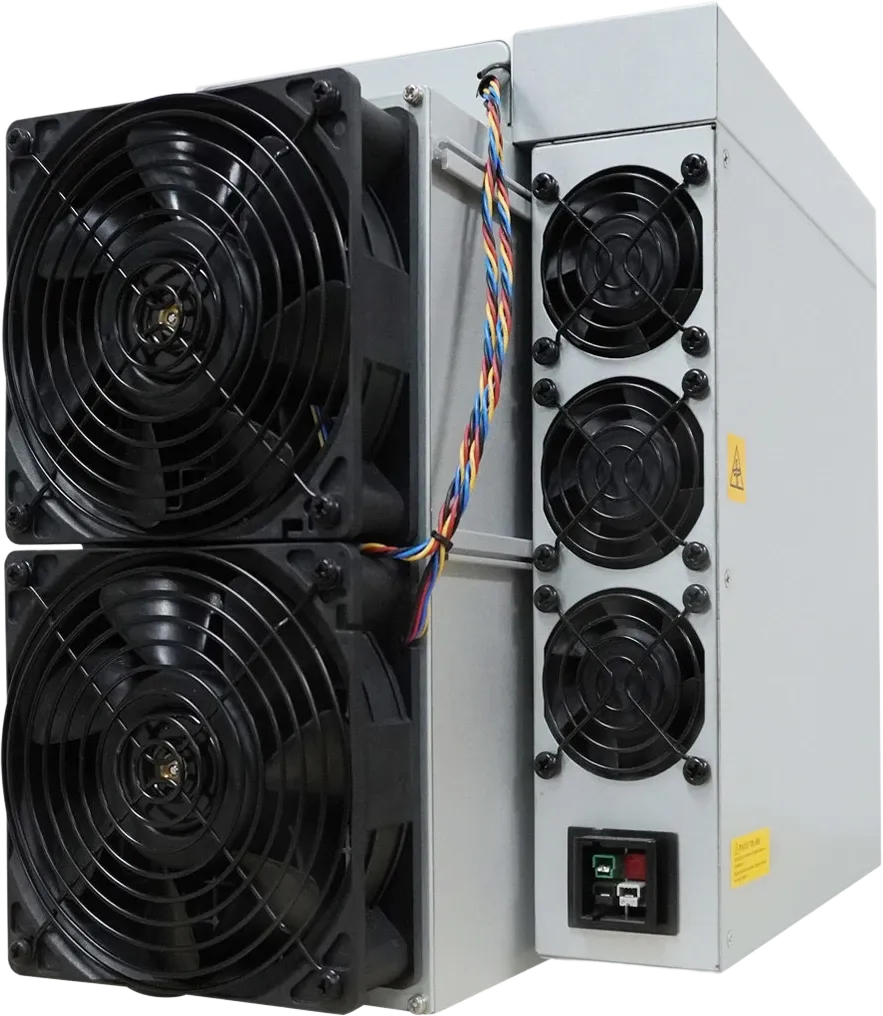
Kaspa Mining Calculator: KAS per Day, Power Cost and J/TH
Short answer: A Kaspa mining calculator turns six numbers you supply (hashrate, power draw, electricity price, today’s KAS per TH/s per day, the KAS price and your pool fee) into an estimate of the KAS a machine mines per day and what that day’s electricity costs. The calculator below only multiplies the inputs you enter. It fetches no live network data, so the result is a snapshot, not a forecast.
Kaspa mining calculator
This calculator only multiplies the numbers you enter. It does not fetch live network data, and real results change constantly with network hashrate, the emission schedule, KAS price and fees.
This Kaspa calculator, which you may also see called a KAS mining calculator or a Kaspa miner calculator, shows six results: KAS per day after the pool fee, the value of that KAS at the price you entered, the daily electricity cost, the daily result after electricity, the machine’s efficiency in J/TH, and the break-even electricity price. Bitminers does not guarantee mining profitability.
How to fill in each input
- Hashrate (TH/s). Use the listed hashrate, or the average your pool reports once the miner runs. Convert GH/s by dividing by 1,000 (400 GH/s = 0.4 TH/s). More on units: hashrate, terahash and J/TH explained.
- Power (W). Start with the listed power draw, or measure at the wall with a power meter once the machine has warmed up.
- Electricity price (USD/kWh). Use the all-in rate: your total bill (energy, delivery, taxes) divided by the kWh billed. The headline energy rate alone usually understates it.
- KAS per TH/s per day. Look this up every time. Most Kaspa pools show an estimate on their dashboard, and kHeavyHash network calculators (WhatToMine is one example) publish one too. Check the unit: multiply a per-GH/s figure by 1,000, or divide a per-machine figure by that machine’s hashrate.
- KAS price (USD). Use the current price from an exchange or price tracker you trust; it moves through the day.
- Pool fee (%). Read it from your pool’s fee page. Fees can differ by payout method, as covered in how mining pools work.
The formula, written out
Every result comes from these lines and nothing else:
- KAS per day = hashrate (TH/s) × KAS per TH/s per day × (1 − pool fee ÷ 100)
- Value of that KAS = KAS per day × KAS price
- Electricity used per day (kWh) = power (W) ÷ 1,000 × 24
- Daily electricity cost = kWh per day × electricity price
- Daily result after electricity = value of that KAS − daily electricity cost
- Efficiency (J/TH) = power (W) ÷ hashrate (TH/s)
- Break-even electricity price = value of that KAS ÷ kWh per day
The break-even electricity price is often the most useful line: the highest price per kWh at which a day’s KAS covers that day’s electricity, at your inputs.
Worked example (illustration only)
These are round figures chosen to show the arithmetic. They are not today’s KAS price or network data and do not describe a specific machine.
| Input | Illustrative value |
|---|---|
| Hashrate | 40 TH/s |
| Power | 3,000 W |
| Electricity price | $0.10 per kWh |
| KAS per TH/s per day | 10 KAS |
| KAS price | $0.02 |
| Pool fee | 1% |
- KAS per day: 40 × 10 × 0.99 = 396 KAS
- Value at the illustrative price: 396 × $0.02 = $7.92
- Electricity: 3,000 ÷ 1,000 × 24 = 72 kWh, × $0.10 = $7.20
- Daily result after electricity: $7.92 − $7.20 = $0.72
- Efficiency: 3,000 ÷ 40 = 75 J/TH
- Break-even electricity price: $7.92 ÷ 72 = $0.11 per kWh
Now change one input. If KAS per TH/s per day falls from 10 to 9, the same machine mines 356.4 KAS worth $7.13, and the daily result after electricity becomes −$0.07. One small change can flip the sign, so re-run the numbers with fresh data instead of relying on an old estimate.
Why KAS per TH/s per day keeps changing
KAS per TH/s per day is roughly the KAS the network issues in a day, divided by the total network hashrate. Both parts move.
Network hashrate
When more kHeavyHash machines switch on anywhere, each TH/s is a smaller share of the network, so KAS per TH/s per day falls; when machines switch off, it rises. Block explorers and pool dashboards publish network hashrate, which changes daily.
Kaspa’s emission schedule
Issuance follows a fixed schedule in the node software. In the coinbase code of rusty-kaspa, the official Rust node, the reward is defined per second for each month. The table starts at 440 KAS per second and falls to 220 KAS per second twelve months later. Each month’s value is about 0.944 times the previous month’s, a cut of roughly 5.6% per month. That is one halving per year, applied in twelve small steps.
In practice, even with flat network hashrate, KAS per TH/s per day drifts down every month.
Block rate
The Crescendo hard fork, shipped in rusty-kaspa v1.0.0, moved mainnet from 1 to 10 blocks per second in May 2025. The same coinbase code divides the per-second reward by the block rate, so each block now carries about a tenth of the old reward, but the KAS issued per second follows the same schedule. Faster blocks do not by themselves change KAS per TH/s per day.
What else to include
- Pool fee. Already in the calculator; also check minimum payouts and withdrawal fees.
- Uptime. The calculator assumes 24 hours a day. For 95% uptime, multiply both hashrate and power by 0.95.
- Cooling and ventilation. Full-size kHeavyHash miners draw over 3,000 W, nearly all of it leaving as heat. Add exhaust fans or air conditioning that run because of the miner to the power field.
- US electricity rates. Rates differ widely by state, utility and customer class. Time-of-use plans can make overnight power cheaper, and some commercial plans add demand charges. The U.S. Energy Information Administration publishes average retail prices by state.
- One-time costs. Wiring, a dedicated 240 V circuit and shipping are outside a daily calculation. For setup, see how to mine Kaspa. For SHA-256, Scrypt and other coins, use our ASIC miner calculator.
Kaspa miners we list, with figures for the calculator
These are the machines currently in our Kaspa miners category. Figures come from each listing’s specification summary; enter hashrate and power straight into the calculator. IceRiver differences are covered in IceRiver models explained.
| Miner | Listed hashrate | Listed power | Listed efficiency |
|---|---|---|---|
| Antminer KS7 (45 TH/s) | 45 TH/s | 3,465 W | 77.0 J/TH |
| Antminer KS7 (40 TH/s) | 40 TH/s | 3,080 W | 77.0 J/TH |
| IceRiver KS7 | 30 TH/s | 3,500 W | 116.7 J/TH |
| IceRiver KS7 Lite | 4.2 TH/s | 500 W | 119.0 J/TH |
| Antminer KS5 Pro | 21 TH/s | 3,150 W | 150.0 J/TH |
| Antminer KS5 | 20 TH/s | 3,050 W | 152.5 J/TH |
| IceRiver KS5M | 15 TH/s | 3,400 W | 226.7 J/TH |
| IceRiver KS0 Ultra | 400 GH/s (0.4 TH/s) | 100 W | 0.25 J/GH (250 J/TH) |
| IceRiver KS2 Lite | 2 TH/s | 500 W | 250.0 J/TH |
| IceRiver KS5L | 12 TH/s | 3,400 W | 283.3 J/TH |
| Goldshell E-KA1M | 5 TH/s | 1,800 W | 360.0 J/TH |
| Goldshell KA-BOX Pro | 1.6 TH/s | 600 W | 375.0 J/TH |
| IceRiver KS3M | 6 TH/s | 3,400 W | 566.7 J/TH |
Lower J/TH raises the break-even electricity price. Machines with equal J/TH, such as the two Antminer KS7 versions, share the same break-even price at the same inputs; the larger one mines more KAS and uses more power.
Frequently asked questions
How do you use a Kaspa mining calculator?
Enter hashrate in TH/s, power in watts, your all-in electricity price, today’s KAS per TH/s per day, the KAS price and your pool fee. It multiplies them into KAS per day, its value, electricity cost, daily result after electricity, J/TH and break-even electricity price.
Where do I find KAS per TH/s per day?
Look on your pool’s dashboard or a kHeavyHash network calculator. Confirm it is per TH/s and look it up again each time.
Why does my pool show less KAS than the calculator?
Usually lower real hashrate, downtime, rejected shares, payout-method differences, or a KAS per TH/s per day figure that has changed. Compare the pool’s 24-hour average hashrate with your input.
Can I use this calculator for a GH/s miner such as the IceRiver KS0 Ultra?
Yes. Enter 0.4 TH/s (400 GH/s) and 100 W; the efficiency line will show 250 J/TH.