
Monero Mining Guide: RandomX, CPU Mining, P2Pool and Monero ASICs
Short answer: Monero mining means running the RandomX proof-of-work algorithm, which Monero adopted in a network upgrade on November 30, 2019 and which was designed to favor ordinary CPUs. You can mine with a desktop CPU and open-source software such as XMRig, either through a pool or through P2Pool, a decentralized pool. Bitmain now also sells RandomX ASICs, including the Antminer X9 rated at 1 MH/s and 2,472 W. Whatever hardware you use, payouts go to a Monero wallet you control.
What is Monero?
Monero (XMR) is a cryptocurrency built for private, censorship-resistant transactions. According to the official Monero FAQ, it hides the sender, receiver and amount of every transaction using stealth addresses, ring signatures and RingCT. Privacy is on by default, not an option you switch on.
Two protocol details matter to miners:
- Block time: a new block is added roughly every 2 minutes.
- Tail emission: since block 2,641,623 (June 9, 2022), the block reward has stayed at 0.6 XMR per block, or 0.3 XMR per minute, and the Monero project says it will remain there permanently.
Because the block reward is now flat, the main variables for a miner are the total network hashrate, the XMR price and the cost of electricity.
RandomX: Monero’s mining algorithm
RandomX is a proof-of-work algorithm developed by Monero contributors. It is optimized for CPUs and works by executing random code and using other memory-heavy techniques. Monero switched to RandomX in the network upgrade of November 30, 2019 (release 0.15). The project’s stated goal was to make specialized hardware much less efficient relative to the “regular” computers that thousands of miners already own.
The Monero project notes that RandomX can run on both CPUs and GPUs, but that CPUs are far more efficient at it. That is why Monero mining has long been a CPU activity, unlike Bitcoin (SHA-256) or Kaspa (kHeavyHash), where ASICs supply nearly all the hashrate. For background on proof of work itself, see our guide to proof of work vs proof of stake.
How to mine Monero with a CPU
- Create a wallet. Use the official Monero GUI or CLI wallet, or another long-established wallet. Store the seed phrase offline.
- Pick mining software. XMRig is a widely used open-source, cross-platform RandomX miner released under the GPL-3.0 license. Download it only from its official project page, because fake miner downloads are common. The official Monero wallets can also mine solo on a CPU without extra software.
- Choose how to mine: a regular pool, P2Pool or solo (see below).
- Configure and run. Enter the pool address and your wallet address in the miner’s configuration, start it, and confirm on the pool’s dashboard that it sees your hashrate.
Keep an eye on temperatures. RandomX keeps every core busy, so a desktop or laptop will run hot and loud for as long as it mines.
Pools, P2Pool and solo mining
| Regular pool | P2Pool | Solo | |
|---|---|---|---|
| How it works | An operator collects hashrate and pays members | A sidechain to Monero; miners share the work without a central server | Your own node and wallet mine alone |
| Payouts | Frequent, minus the pool fee | Paid directly in the coinbase transaction of blocks the pool finds | Only when you find a block |
| Custody | The operator holds funds until payout | Funds are never held by a single party | Direct to your wallet |
| Setup | Easiest | Run your own Monero node plus P2Pool | Run your own node |
The Monero project notes that solo mining makes the network more secure than pool mining, but a small miner might wait months to find a block. P2Pool sits between the two: you keep control of your own node, and payouts arrive as the P2Pool chain finds Monero blocks. Our guide to how mining pools work covers fees and payout models.
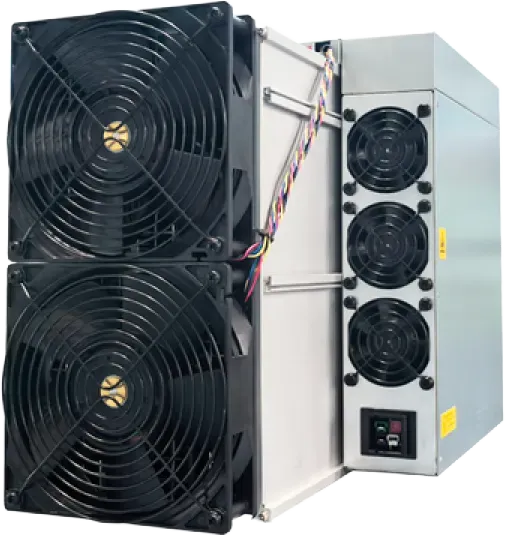
Monero ASICs: the Antminer X9 and X5
Bitmain sells two RandomX machines. Both are in our other ASIC miners category. Specifications are the listed ratings on each product page. Prices are the Bitminers price at the time of writing (October 5, 2026) and can change.
| Miner | Hashrate | Power | Efficiency | Noise | Listed release | Price |
|---|---|---|---|---|---|---|
| Antminer X9 | 1 MH/s (1,000 kH/s) | 2,472 W | 2.47 J/kH | 76 dB | July 31, 2026 | $5,449.00 |
| Antminer X5 | 212 kH/s | 1,350 W | 6.37 J/kH | not listed | not listed | $2,370.00 |
The X9 does almost five times the X5’s hashrate at well under half the energy per kH/s. Bitmain also lists Zephyr (ZEPH) and Tari (XTM, RandomX) as coins the X9 can mine. Both units are air-cooled, full-size machines. At 76 dB, the X9 belongs in a garage, outbuilding or server room, not a living space. More Bitmain models are on our Bitmain brand page.
What a RandomX ASIC means for the network
RandomX was designed so that CPUs would stay competitive, and the Monero project describes it as ASIC-resistant. The X5 and X9 show that dedicated RandomX hardware now exists. Every miner still competes for the same fixed block reward, so new hashrate from any source lowers each existing miner’s share of the network. Monero has changed its proof-of-work algorithm through network upgrades before, including the 2019 switch to RandomX. Any future change would be decided by the Monero community, and we do not predict one way or the other.
Power planning for an X9
- Voltage: Bitmain specifies 220-277 V AC single-phase for the X9, so it needs a 240 V circuit in a typical US building. The X5 is specified for 200-240 V AC.
- Current: 2,472 W at 240 V is about 10.3 A of continuous load. Have an electrician size a dedicated circuit for it.
- Energy: 2.472 kW × 24 hours is about 59.3 kWh per day. Multiply by your electricity rate for the daily cost.
- Heat: nearly all of that power becomes heat, so plan ventilation before the machine arrives.
Risks to understand
Mining results depend on the XMR price, total network hashrate, pool fees and your electricity price. All of them change, and current network hashrate and difficulty are published by Monero block explorers and pool dashboards. Protocol changes can affect any mining hardware, CPU or ASIC: a network upgrade could change the algorithm or its parameters, and a single-purpose RandomX machine can only mine RandomX coins. Read the specifications, check current data and test your numbers with our ASIC miner profitability calculator. Bitminers does not guarantee mining profitability. To learn how ASICs differ from general-purpose hardware, see what an ASIC miner is. To convert kH/s, MH/s and J/kH figures, use our hashrate converter guide.
Frequently asked questions
Can you still mine Monero with a CPU?
Yes. RandomX was designed for CPUs, and the official Monero wallets and open-source miners such as XMRig support CPU mining. Your share of rewards depends on your hashrate relative to the whole network.
When did Monero switch to RandomX?
Monero adopted RandomX in the network upgrade of November 30, 2019, which came with release 0.15.
Is there a Monero ASIC?
Yes. Bitmain sells the Antminer X5 (212 kH/s) and the Antminer X9 (1 MH/s), both rated for RandomX.
What is P2Pool?
P2Pool is a decentralized Monero mining pool that runs as a sidechain. It has no central server, miners run their own node, and payouts go directly to miners in the coinbase transaction of blocks it finds.
How much power does the Antminer X9 use?
The X9 is rated at 2,472 W on 220-277 V AC single-phase, which is 2.47 J per kH/s at its 1 MH/s rating.