
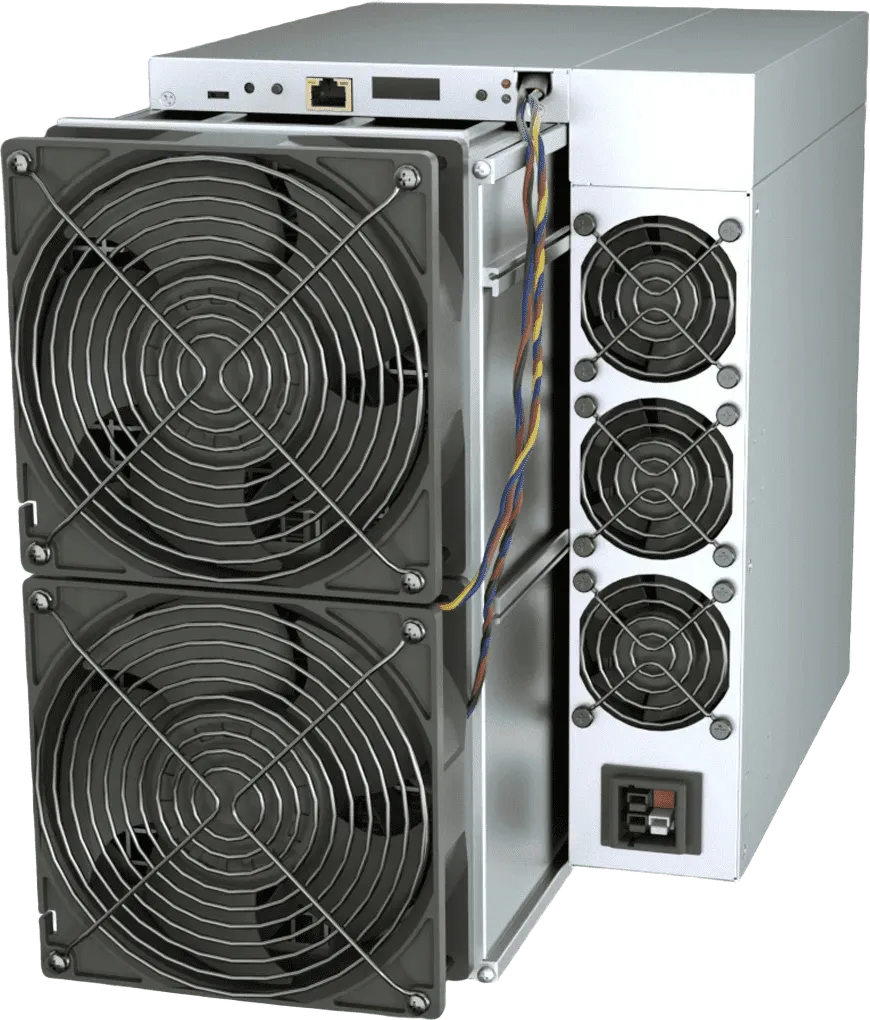
ASIC Miner Firmware Explained: Stock vs Braiins OS, LuxOS and VNish
Short answer: ASIC miner firmware is the operating system that runs on a miner’s control board. It provides the web interface, connects the machine to a pool, controls the fans and temperature limits, and sets the frequency and voltage of the hashing chips. Every miner ships with the manufacturer’s stock firmware; third-party options such as Braiins OS, LuxOS and VNish replace it with their own tuning and fleet tools, usually in exchange for a developer fee paid in hashrate. Installing third-party firmware or overclocking may void the Bitminers warranty, so contact us before you change anything.
This guide explains what firmware does, how stock and third-party firmware differ, the main risks, and how firmware changes interact with our warranty. It does not recommend one firmware over another. Bitminers does not guarantee mining profitability.
What ASIC miner firmware does
An ASIC miner has three main parts: hashboards full of mining chips, a power supply, and a small control board that runs the firmware. Our guide to ASIC chips and hashboards covers the hardware side. The firmware is what ties those parts together. Its main jobs are:
- Operating system and web UI: the control board boots a small embedded system, and you manage the miner from a browser on your local network.
- Pool configuration: you enter pool addresses, worker names and backup pools, and the firmware sends the chips’ work results to the pool.
- Fan and thermal control: the firmware reads temperature sensors, adjusts fan speed, and throttles or shuts down the hashboards if they get too hot.
- Frequency and voltage tuning: it sets how fast the chips run and how much voltage they receive, which together decide hashrate and power draw.
- Monitoring and logs: hashrate per board, chip errors, fan speeds and temperatures, which help you diagnose faults.
If you are new to the hardware itself, start with What Is an ASIC Miner?
Stock firmware vs third-party firmware
Stock firmware is written by the manufacturer and installed at the factory. It runs the machine at the hashrate and power figures the manufacturer publishes, and it is the configuration the hardware was validated and sold with.
Third-party firmware is developed by independent companies and installed by the owner. It typically adds finer control over power and performance, per-chip tuning, extra cooling options and tools for managing many machines at once. Developers usually charge a fee by directing a small share of the miner’s hashrate to their own pool. The table compares the three best-known options using each developer’s own published information.
| Firmware | Developer | Hardware the developer lists | Fee model stated by the developer | Main tuning features |
|---|---|---|---|---|
| Manufacturer stock firmware | The miner’s manufacturer | That manufacturer’s own models | No developer fee | Factory settings |
| Braiins OS | Braiins | Bitmain Antminer models, including S21 and S19 series | 2-2.5% of hashrate depending on model, directed to Braiins Pool; pool fee rebated when mining on Braiins Pool | Per-chip autotuning, power target in watts, dynamic performance scaling for heat |
| LuxOS | Luxor Technology | Bitmain Antminer S19 and S21 series; selected MicroBT Whatsminer models | 2.8%; free pool usage when mining on Luxor’s pool | Auto-tuning, power targeting, tuning profiles, thermal management, fast load shedding |
| VNish | VNish | Bitmain Antminer models | 2-2.8% of hashrate, redirected to the developer’s pool | Auto-tuning of frequency and voltage, manual frequency and voltage control, power limit, fan curves |
Fees, supported models and features change between releases, so always check the developer’s current documentation before deciding.
Braiins OS
Braiins OS (also referred to as Braiins OS+) is firmware for Bitcoin ASICs from Braiins, the company behind Braiins Pool. According to the official Braiins OS page, it autotunes the frequency of individual chips to get the most hashrate from a power level you choose, lets you set a power target in watts, and scales performance down in hot conditions. Braiins states a 2-2.5% developer fee, depending on the hardware model, collected by directing that share of hashrate to its pool. Braiins recommends its Toolbox application for installing on S19 and S21 series control boards, and its documentation also describes an SD card method that leaves the miner’s internal memory untouched.
LuxOS
LuxOS is developed by Luxor Technology, a US-based company that also runs a mining pool. The LuxOS documentation states a 2.8% fee and free pool usage when mining on Luxor’s pool, and says LuxOS is installed with Luxor’s Commander tool. Luxor lists features such as auto-tuning, power targeting, custom tuning profiles, temperature management and load shedding that cuts a miner to a very low power state within seconds. Luxor’s compatibility list covers Antminer S19 and S21 models plus some Whatsminer models.
VNish firmware
VNish firmware is aftermarket firmware for Bitmain Antminer machines, published at vnish.com. The developer describes auto-tuning of frequencies and voltages, manual frequency and voltage control, power limit settings, fan curve management and mass installation through a fleet toolkit. VNish states a developer fee of 2-2.8% of hashrate, redirected to the developers’ pool. The developer’s site lists which models each release supports.
Risks to understand before changing firmware
Compatibility depends on model and control board
Firmware is built for specific combinations of miner model, hashboard version and control board. Two units sold under the same model name can use different control boards, and a build that works on one may not install on the other. Check the exact model, hashrate variant and control board against the developer’s compatibility list first.
Bricking
A failed or interrupted flash, a wrong image or a power cut during installation can leave a control board unable to boot. Recovery may need an SD card image, a replacement control board or specialist repair.
Manufacturer updates can block third-party firmware
Manufacturers update stock firmware, and some updates change what can be installed. For example, Luxor’s compatibility notes say machines with Bitmain firmware dated March 2024 or newer, and machines with CVITEK control boards, need Luxor’s remote install rather than self-installation. Read the developer’s notes before updating stock firmware on a machine you may want to change later.
Security
Firmware has full control over the miner, including where its hashrate is sent. Download firmware only from the developer’s or manufacturer’s official site, check any published checksums, keep miners off the open internet, and change default passwords.
Electrical and thermal limits
Raising frequency or voltage raises power draw and heat. Your power supply, circuits, breakers and cooling are sized for a particular load; running above it can trip breakers, overheat wiring or shorten component life. Our Bitcoin mining farm guide covers power and cooling planning, and our comparison of air cooling and hydro cooling explains how cooling type affects the heat a machine can shed.
Firmware changes and the Bitminers warranty
Our warranty policy lists what the 30-day limited warranty does not cover. The exclusions include “Unauthorized modifications or repairs” and “Overclocking or improper firmware adjustments”. In practice:
- Installing third-party firmware, or overclocking with any firmware, may void the Bitminers warranty on that machine.
- Contact Bitminers support before you change firmware, and tell us the model and what you plan to install.
- Test the miner on its stock firmware when it arrives, so any fault can be raised within the warranty period while the machine is in its original configuration.
- Keep a record of the stock firmware version and settings before making any change.
How firmware relates to the machines we sell
Every miner Bitminers sells is new and ships with the manufacturer’s firmware. The third-party projects above focus mainly on Bitmain Antminer machines, such as those in our Antminer S21 category and Antminer S19 category. Product pages list the stock figures, for example the Antminer S21 XP (270 TH/s, 3,645 W, 13.5 J/TH, air-cooled with 4 fans), the Antminer S21+ (235 TH/s, 3,877 W, 16.5 J/TH) and the Antminer S19 XP (141 TH/s, 3,032 W, 21.5 J/TH). Those are the figures to plan your power and cooling around. Changing power or hashrate settings changes revenue and electricity cost together; our hashprice guide explains how to compare the two. Bitminers does not guarantee mining profitability.
Frequently asked questions
What is a mining OS?
A mining OS is the operating system and control software that runs a miner. On an ASIC it is the firmware on the control board, which handles the pool connection, fan and chip tuning and the web dashboard; Braiins OS, LuxOS and VNish are third-party alternatives to the stock Bitmain or MicroBT firmware. GPU rigs use PC-based mining operating systems instead, which are a different category of software.
Does third-party firmware void the Bitminers warranty?
It may. Our warranty policy excludes unauthorized modifications or repairs and overclocking or improper firmware adjustments. Contact Bitminers support before installing third-party firmware or changing performance settings.
Which is the best ASIC miner firmware?
There is no single answer. Braiins OS, LuxOS and VNish differ in supported models, fee model, pool integration and tools. Compare each developer’s current documentation against your exact model and control board, and consider staying on stock firmware during the warranty period.
How do developer fees work on Braiins OS, LuxOS and VNish?
Each developer states a fee as a share of hashrate: 2-2.5% for Braiins OS, 2.8% for LuxOS, and 2-2.8% for VNish, depending on model. Braiins and Luxor also say pool fees are waived or rebated when you mine on their own pools.
Can I go back to stock firmware?
Often yes, but the method depends on the firmware and control board. Braiins documents an SD card method that leaves the stock firmware in internal memory. Check the developer’s instructions and download stock firmware only from the manufacturer’s official support site.
Can a manufacturer update stop third-party firmware from installing?
Yes, on some boards. Luxor’s documentation, for example, says Antminers with Bitmain firmware dated March 2024 or newer need its remote install service. Check compatibility notes before updating stock firmware.