
Public Pool (public-pool.io) Solo Mining Guide
Short answer: Public Pool is open-source Bitcoin mining pool software, and public-pool.io is the public instance that runs it, with its dashboard at web.public-pool.io. It advertises no fees. To mine solo, point your miner at stratum+tcp://public-pool.io:3333 and use your Bitcoin address plus an optional worker name as the username; if your miner finds a block, the reward goes to that address. For a home miner the chance of that is small, so treat it as a hobby.
Searches for “public pool io”, “web public pool” and “public pool bitaxe” all lead to the same project. This guide covers what it is, its connection settings, the dashboard, running your own copy and how it differs from CKPool. For background, see how mining pools work and solo mining and lottery miners. Pool details below were checked on web.public-pool.io and in the project’s source code on October 4, 2026; confirm them there before you mine. Bitminers does not guarantee mining profitability.
What Public Pool is
The name covers three things:
- The software. The Public Pool GitHub repository, under the benjamin-wilson account, describes it as a NestJS and TypeScript Bitcoin stratum mining server. It is licensed under GPL-3.0. The web interface lives in a separate public-pool-ui repository.
- public-pool.io. The public instance that miners connect to. Its terms of service (effective June 20, 2026) say the pool operator runs the server code published in the official repository for pool logic and payout-critical behavior, while deployment settings, keys and infrastructure details may stay private. The terms do not name a company behind it.
- web.public-pool.io. The web dashboard: connection details, connected devices, high scores, found blocks and per-address statistics. This is what people mean by “web public pool”.
Fees and how payouts work
The site’s header reads “NO FEES”. It says hosting is paid for through hardware affiliate links and donations, which “allow 0% fees”.
public-pool.io offers two payout modes on separate ports:
- Solo: “If your miner finds a block, the reward goes to your Bitcoin address.” Nothing is paid otherwise; there is no balance or partial credit.
- PPLNS: described as mining together and splitting block rewards by each miner’s recent valid work. How that differs from per-share payouts is covered in FPPS vs PPS vs PPLNS.
Read the terms before you rely on it. They say the service is provided as-is, with no promise that any share, block submission or payout will be credited or paid, no promise of uptime, and that a wrong address, wrong payout mode or malformed username may mean no credit or no payout.
public-pool.io connection settings
These are the endpoints shown on the dashboard. Pick the row for the payout mode you want; the port decides which mode your work goes to.
| Mode and protocol | Address |
|---|---|
| Solo, Stratum V1 | stratum+tcp://public-pool.io:3333 |
| Solo, Stratum V1 + TLS | stratum+tls://public-pool.io:4333 |
| Solo, Stratum V2 | stratum2+tcp://public-pool.io:23330 (with the key shown on the site) |
| PPLNS, Stratum V1 | stratum+tcp://public-pool.io:13333 |
| PPLNS, Stratum V1 + TLS | stratum+tls://public-pool.io:14333 |
| PPLNS, Stratum V2 | stratum2+tcp://public-pool.io:23331 |
| PPLNS, DATUM | datum://public-pool.io:23336 |
Username: the site gives the format as your BTC address, a dot, then a worker name. Password: the site does not specify one; the Bitaxe firmware’s default is x. The site lists no separate regional servers.
Using Public Pool with a Bitaxe, NerdQaxe or NerdMiner
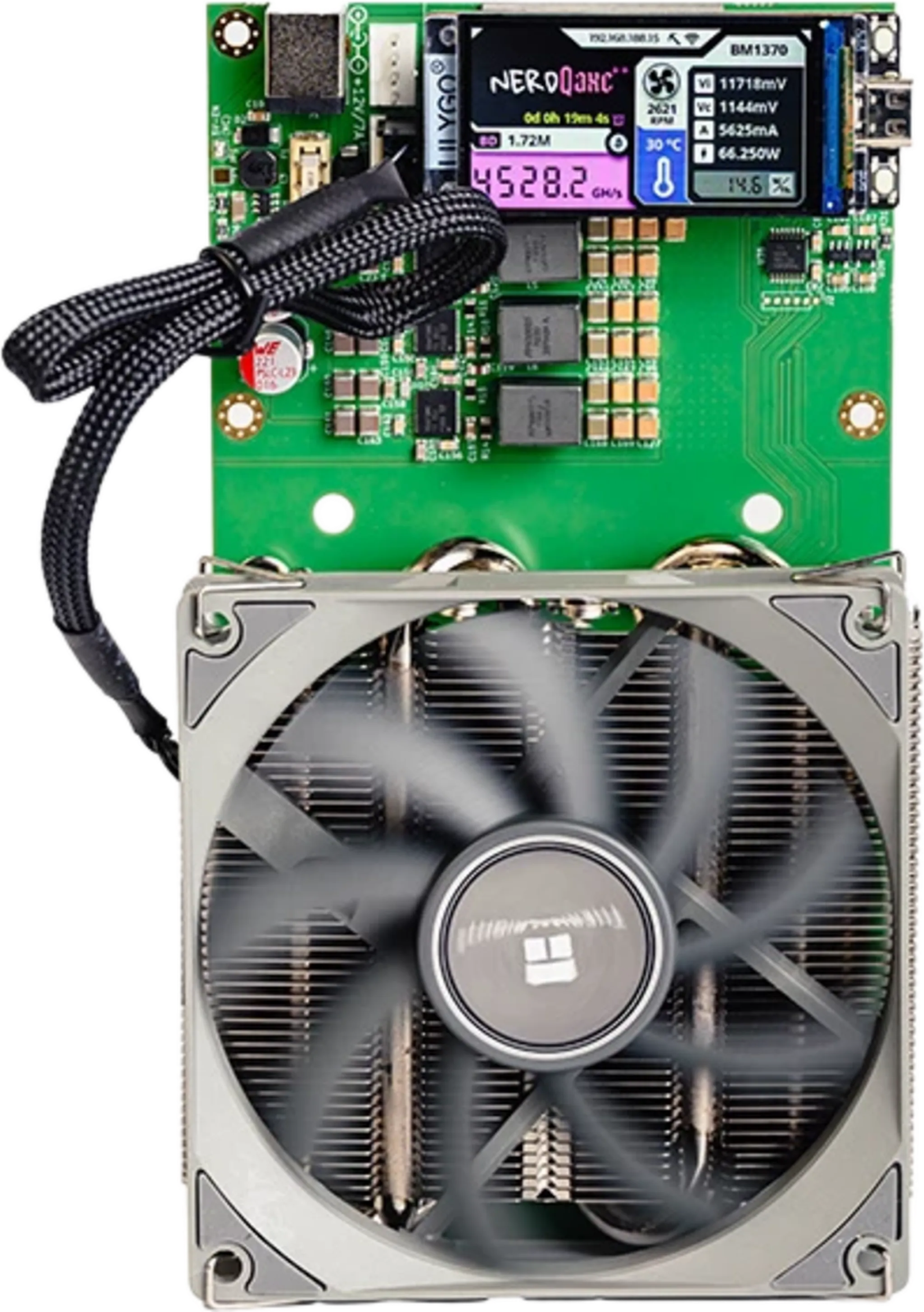
Public Pool is closely tied to open-source home miners. The dashboard marks open-source hardware with its own icon, and Bitaxe, NerdQAxe++ and Nerd Miner devices are among the most common entries in its connected-miners table.
The Bitaxe firmware’s published configuration for the Gamma 601 board already uses public-pool.io on port 3333 as the primary pool, with solo.ckpool.org as the fallback. What it does not have is your address: the username fields ship with a factory Bitcoin address, and AxeOS shows a warning until you change it. In AxeOS:
- Open the pool settings for the primary pool.
- Check that Stratum Host is public-pool.io and Stratum Port is 3333 (or 13333 if you want PPLNS).
- Set User to your own address plus a worker name, such as youraddress.bitaxe1.
- Leave Password as x, update the fallback username too, save and restart.
Our Bitaxe solo mining guide covers first-time Wi-Fi setup. A NerdQaxe++ takes the same values through its browser setup page. Nerd Miners run at far lower hashrates than either; the differences are laid out in NerdMiner vs NerdQaxe vs Bitaxe.
Public Pool mining is not limited to small devices; larger home units work too. Canaan’s Avalon models take pool details in the Avalon Family app, and Antminer or Whatsminer units take the stratum+tcp address, username and password in their web pool settings.
| Home miner | Hashrate | Price* |
|---|---|---|
| Bitaxe Gamma 601 | 1.2 TH/s at 17 W | $77.17 |
| NerdQaxe++ | 4.8 TH/s at 76 W | $279.00 |
| Canaan Avalon Nano 3 | 4 TH/s at 140 W | $126.20 |
| Canaan Avalon Mini 3 | 37.5 TH/s at 800 W | $820.41 |
*Bitminers prices at the time of writing (October 4, 2026); check each product page for the current price. See all models in our home and solo miners category.
Reading the web.public-pool.io dashboard
The home page shows the connection details plus three public tables:
- Connected Miners: device types with how many are working, their combined hashrate and the highest share difficulty each type has reached.
- High Scores: the highest-difficulty shares submitted, with device type and how long ago.
- Found Blocks: block height, the address paid and the worker name.
“Find Your Miners” takes a Bitcoin address and opens that address’s page. It needs no login. It shows hashrate split by payout mode (10-minute credited work), solo and PPLNS work, the highest difficulty submitted by the address, and a workers list grouped by worker name with session, hashrate, uptime and last-seen time. Anyone who knows your address can look this up, so use a fresh address if that matters to you.
The “Best Difficulty” figure is your luckiest share so far. A block needs a share at or above the full network difficulty, so it shows how close you came, but it is not progress: each hash is an independent attempt. To estimate the odds for your hashrate, use our solo mining calculator.
Running your own Public Pool
Because the code is open, you can run your own instance against your own Bitcoin node. Then your node builds the block templates and no outside operator is involved. Per the repository:
- It runs with Node.js, PM2 or Docker and Docker Compose, configured through a .env file based on .env.example.
- The Docker setup exposes stratum ports 3333 and 3334 and binds them to 127.0.0.1 by default, so you change the compose file to reach them from miners on your network.
- It needs RPC access to a Bitcoin node; for Docker, the README says to add rpcallowip=172.16.0.0/12 to bitcoin.conf.
On a home node, Public Pool is also listed in the Umbrel app store, credited to developer Benjamin Wilson. That listing says it is compatible with umbrelOS 0.5 or later and is automatically configured to work with your Bitcoin node. You then point your miners at the stratum details shown in the app.
Public Pool vs CKPool
| Point | public-pool.io | solo.ckpool.org |
|---|---|---|
| Software and license | Public Pool, TypeScript (NestJS), GPL-3.0 | ckpool, C, GPLv3 |
| Fee stated by the pool | No fees | 2% |
| Payout modes | Solo and PPLNS | Solo only |
| Main solo endpoint | public-pool.io:3333 | stratum.ckpool.org:3333 |
| Regional servers listed | None | US west, US east, Germany, Singapore, Australia |
| Statistics | Web dashboard by address | Raw JSON by address, plus graphs |
Both take your address as the username and pay a solo block directly to it. The main practical differences are the fee, the PPLNS option and how statistics are shown.
Frequently asked questions
Is public-pool.io free to use?
The site states no fees and says hosting is funded through affiliate links and donations. Your miner’s electricity is still your cost, and Bitminers does not guarantee mining profitability.
What is the public-pool.io stratum URL?
For solo mining over Stratum V1 it is stratum+tcp://public-pool.io:3333, or stratum+tls://public-pool.io:4333 with TLS. PPLNS uses port 13333, or 14333 with TLS.
Is Public Pool solo or PPLNS?
Both, on different ports. The solo ports pay a block your miner finds to your address; the PPLNS ports split pool-found blocks by recent valid work.
Can I run Public Pool on Umbrel?
Yes. It is listed in the Umbrel app store and is configured automatically to use the Bitcoin node on your Umbrel. You can also run it with Docker from the GitHub repository.
Why doesn’t my Bitaxe show up on web.public-pool.io?
Check that the address you search matches the one in the miner’s User field exactly, that the factory address has been replaced, and that AxeOS reports accepted shares. Then give the dashboard a few minutes to update.