Zcash Mining Guide: Equihash, Sol/s and the Antminer Z15 Pro
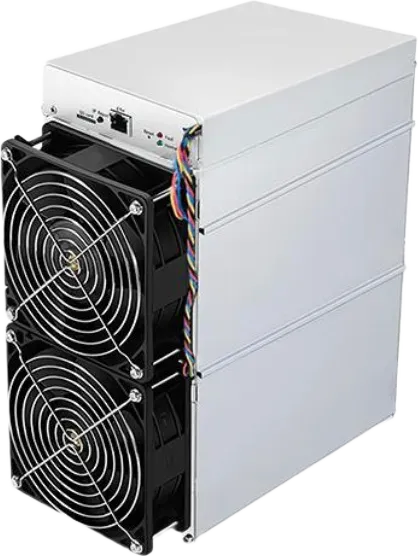
Short answer: Zcash (ZEC) is a privacy-focused cryptocurrency secured by the Equihash proof-of-work algorithm, and people searching for “Zerocash mining” almost always mean Zcash mining. To mine it today you point an Equihash ASIC, such as the Antminer Z15 Pro (840 KSol/s, 2,780 W), at a Zcash pool and have payouts sent to a Zcash address you control. Equihash speed is measured in solutions per second (Sol/s), not hashes per second.
What is Zcash, and where does the name Zerocash come from?
Zcash launched on October 28, 2016. It was the first practical application of zk-SNARKs, a type of zero-knowledge proof that lets the network verify a transaction is valid without revealing the sender, receiver or amount. Zcash has two kinds of addresses:
- Transparent addresses (t-addresses), which work much like Bitcoin addresses.
- Shielded addresses (z-addresses), whose transaction details stay private.
The total supply is fixed at 21 million ZEC.
“Zerocash” is the academic protocol Zcash grew out of. The paper “Zerocash: Decentralized Anonymous Payments from Bitcoin” by Eli Ben-Sasson, Alessandro Chiesa, Christina Garman, Matthew Green, Ian Miers, Eran Tromer and Madars Virza appeared at the IEEE Symposium on Security and Privacy in 2014. The Zcash protocol specification describes Zcash as an implementation of that scheme, with security fixes and improvements. There is no separate “Zerocash” coin to mine.
What is Equihash, and what does Sol/s measure?
Zcash uses Equihash, a memory-hard proof-of-work algorithm designed by Alex Biryukov and Dmitry Khovratovich. It is based on a variation of the Generalized Birthday Problem, and Zcash runs it with the parameters n = 200 and k = 9. The protocol specification says the choice of a memory-hard algorithm was an attempt to address mining centralization. For how proof of work compares with staking, see proof of work vs proof of stake.
A miner’s job is to find valid Equihash solutions for a block header. That is why Equihash hardware is rated in solutions per second:
- 1 KSol/s = 1,000 Sol/s
- 1 MSol/s = 1,000 KSol/s
- Efficiency is quoted in joules per KSol (J/KSol): power in watts divided by KSol/s.
Some listings and spec databases write Equihash speeds as “kH/s”. For Equihash machines that means KSol/s. Sol/s figures cannot be compared with SHA-256 or X11 hash rates, because each algorithm does a different amount of work per unit. Our guides to hashrate and J/TH and the hashrate converter cover unit prefixes in more detail.
How have Zcash block times and halvings changed?
Zcash launched with a 150-second target block time. The Blossom upgrade, activated on December 11, 2019, halved it to 75 seconds. To keep halvings roughly four years apart, the halving interval doubled at the same time, from 840,000 to 1,680,000 blocks.
| Event | Date | Block height | Block subsidy afterward |
|---|---|---|---|
| Blossom upgrade (75-second blocks) | December 11, 2019 | 653,600 | 6.25 ZEC |
| First halving (Canopy upgrade) | November 18, 2020 | 1,046,400 | 3.125 ZEC |
| Second halving (NU6 upgrade) | November 23, 2024 | 2,726,400 | 1.5625 ZEC |
The subsidy figures follow from the block subsidy formula in the protocol specification. Not all of each block’s subsidy goes to the miner: since Canopy, the protocol has directed a share of issuance to development funding streams and, more recently, a deferred development fund lockbox. The miner receives the rest plus transaction fees. Halvings happen at fixed block heights, not on calendar dates, so the timing of the next one depends on actual block times.
How did Zcash mining move from GPUs to Equihash ASICs?
When Zcash launched, Equihash’s memory requirements meant it was mined mainly on general-purpose hardware, especially graphics cards. Dedicated Equihash ASICs appeared later, and Bitmain’s Z-series machines are one example. Bitmain’s Antminer Z15 (June 2020) was followed by the Antminer Z15 Pro (June 2023), which is the Equihash model in our catalog. GPUs and ASICs now mine on the same network, and every machine’s share of blocks depends on its hashrate relative to the network total. For background on how ASICs differ from GPUs and CPUs, read what an ASIC miner is. For other coins and the hardware that mines them, see our list of mineable coins.
Which Equihash miner do we list?
It is in our Antminer Z15 category. Specifications are the listed ratings. Prices are the Bitminers price at the time of writing (October 5, 2026) and can change.
| Miner | Hashrate | Power | Efficiency | Noise | Input power | Price |
|---|---|---|---|---|---|---|
| Antminer Z15 Pro | 840 KSol/s | 2,780 W | 3.31 J/KSol | 75 dB | 200-240 V AC | $1,415.00 |
For comparison, Bitmain rated the older Z15 at 420 KSol/s and 1,510 W, so the Z15 Pro doubles the hashrate at a lower J/KSol. Bitmain’s spec sheet for the Z15 Pro also lists Horizen (ZEN), but Horizen ended proof-of-work mining in July 2025 and moved ZEN to Base as an ERC-20 token, so ZEN can no longer be mined. For how Bitmain names its product lines, see Antminer models explained, and for more Equihash and specialty machines browse other ASIC miners.
How do I mine Zcash, step by step?
- Set up a wallet. Use a long-established Zcash wallet and store the recovery phrase offline. Check which address types your pool can pay out to. Zcash has both transparent and shielded addresses, and pools differ in which ones they accept.
- Choose a pool. With a fixed block subsidy shared across the whole network, a single machine will find a block very rarely, so most miners use a pool. Compare fees, payout method, minimum payout and server locations. Our guide to how mining pools work explains the payout models.
- Connect the miner. Plug the ASIC into your network by Ethernet, open its web interface from a computer on the same network, and enter the pool’s stratum address, your worker name (usually your account or wallet address) and password.
- Confirm it is hashing. After a few minutes the pool dashboard should show your worker and a hashrate close to the rated KSol/s.
What power and site setup does the Z15 Pro need?
- Z15 Pro voltage: 200-240 V AC, so a typical US home needs a 240 V circuit. At 240 V, 2,780 W draws about 11.6 A of continuous load. Have an electrician size a dedicated circuit for it.
- Daily energy: the Z15 Pro uses about 66.7 kWh a day (2.78 kW × 24 hours). Multiply by your all-in electricity rate to get the daily power cost.
- Noise and heat: at a listed 72 to 75 dB, either machine belongs in a garage, outbuilding or server room. Nearly all of the power becomes heat, so plan exhaust airflow before the miner arrives.
What costs and risks should I understand?
What a Zcash miner brings in depends on:
- Network hashrate
- The block subsidy
- Pool fees
- The ZEC price
- Your electricity rate
All of these except the subsidy change daily, and the subsidy halves roughly every four years. Network hashrate and difficulty are published by Zcash block explorers and pool dashboards. Check them before you buy, and test your own numbers with our ASIC miner profitability calculator. A single-algorithm machine can only mine Equihash coins, and a protocol change could affect any hardware. Bitminers does not guarantee mining profitability.
Frequently asked questions
Is Zerocash the same as Zcash?
Not exactly. Zerocash is the 2014 academic protocol, and Zcash is the cryptocurrency that implemented it in 2016. When people search for “zerocash mining”, they mean mining ZEC.
What algorithm does Zcash use?
Equihash, a memory-hard proof-of-work algorithm. Zcash uses it with the parameters n = 200 and k = 9.
What is KSol/s?
Thousands of Equihash solutions per second. The Antminer Z15 Pro is rated at 840 KSol/s and the Antminer Z15 at 420 KSol/s.
Can the Antminer Z15 Pro still mine Horizen?
No. Horizen ended proof-of-work mining in July 2025 when ZEN moved to Base as an ERC-20 token. Zcash (ZEC) is the coin to mine with them.
What is the current Zcash block reward?
Since the second halving on November 23, 2024, the block subsidy has been 1.5625 ZEC per 75-second block. Part of it goes to protocol funding streams, and the miner receives the rest plus fees.